

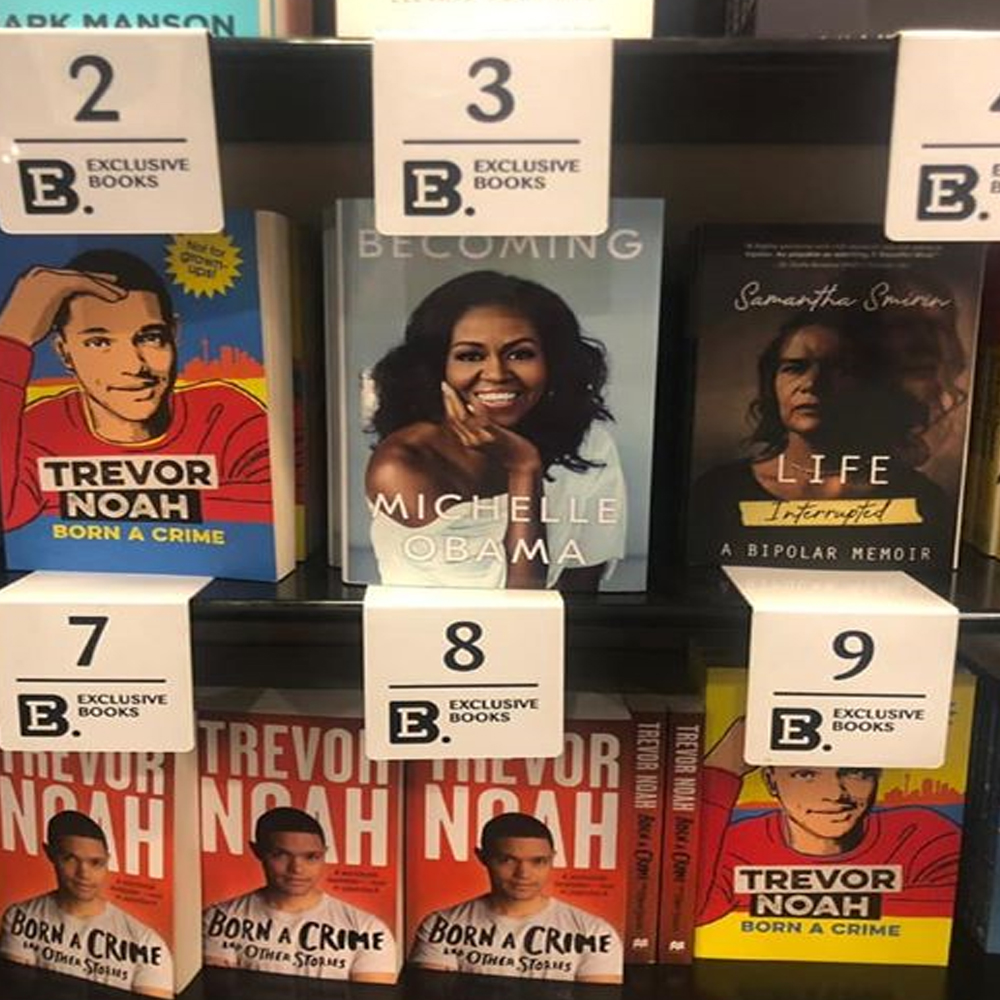


“Life Interrupted – A Bipolar Memoir”
R400.00

Description
Synopsis
It’s 1988 and school days evaporate as a Boeing ascends a young woman into her future. Into a bourgeoning life. In London, an aperture opens. A gateway to a new read of the world. In a specialist’s office – “specialist” in what she wonders? – within only an hour, this stranger sends her blindfolded, never told why to her first disempowered boarding in a mental health hospital.
Her parents begin their forced habit of rescuing her, and on yet another Boeing, now heading backwards in her life, she makes a grab for a confidential letter addressed to a designated psychiatrist in South Africa.
From an economy seat, she discovers she has a mental health illness with two contradictory words conjoined: Manic-Depression.
But where? Where is the site of this illness? Where did it come from? She cannot definitely will not, accept a diagnosis without origin. Her mind spurred on by intractable denial, repeatedly manifests the illness. Hers is a valiant fight for perceived justice. Her enemies are Western psychiatrists, psychologists and allopathic medication.
Induced by denial she cannot see the recurrence of illness cycles. A maze of suffering and memory effacing medical interventions, ethereal delusions of compelling and yet concurrently repelling hallucinatory hell seem not to exist when life is in recovery from an episode. There is no apparent threat to her life when she is taking her baby steps into the normative world again. And so it is, that time and time again, denial bolsters itself and she lets go of recovery to plummet into the fastened imprints of illness: life-threatening horrifying delusions of mania, frightening psychosis and fathomless darkened depression.
A mental health illness trajectory is her life.
There isn’t a pivotal point when her battle transmogrifies into a crusade for freedom from the personal devastation of diagnosis. She becomes bored. It comes with ageing and with tiring of the struggle, the wearing down of years of traumatic experience. She yearns for a reliable and meaningful experience in her precious human life. She chooses joy and adventure. Decades after diagnosis she moves with insight and accumulated wisdom garnered through the journey of her mind. Her mind rests and denial is rubbed out. Acceptance finds its breath, and so does she. A life reclaimed is hers now and she strives to find a way to accept Bipolar, manage its potency and stay in remission. Remission is the greatest achievement for an illness that cannot be cured.
Additional information
| Extract 1: | “The pace of my life accelerates. I’m not aware of the transition. It happens in movement. It happens cross-country. It happens as my friends babble away in their adolescent inanity. I am changing gears. Inspiration flows through me and I grab a pen and my notebook. Frenzied, I start scribbling away. I can’t stop. I forget to breathe. I have my snapping camera. Shutters click, camera bursts. Life is imperative. Mantha, quickly! Quickly transcribe and record this persistent pertinence. A fury burns my mind. Constant arousal guzzles me up. Orgasmic stimulation. My friends are mildly amused – perhaps a little concerned, I don’t know. I couldn’t care less. My mind is revealing its un- bridled power to me so I don’t bother much with what others think. They’re incidental; I’m channelling the words of the gods. On and on, like a runaway train, I fill my notebook, the spine and the covers with the words and more … I stop only when I’m forced to, when there is no space left. Charged with what I will later learn is hypomania, I can’t contain the stimulus I feel. It’s simultaneously confusing, painful delirium and ecstatic joy. Primarily, I’m in deep distress and there is no exit”. |
|---|---|
| Extract 2: | “I’m living in slow motion. I move like an ageing sloth, surviving extinction. I feel guilty and hopeless. Suicide perforates my dis- torted thinking, but those thoughts go no further. I have no plan for suicide in place. White bread, thick creamy salted butter and ham, potatoes and thick slices of cheese offer no solace. Strangled tears under my pillow as I try to smother myself into sleep as often as I can to escape from what I have become. I search my tattered memory for happy times, times of amnesty. Suffering has suffocated my recall. I can’t concentrate, caught in downward-spiralling thoughts. “ |
| Extract 3: | “Here I am free to choose where I will go. I’ve taken off the straightjacket into which I tied myself all those years. I yearn to be away from my history, to live in peace and simplicity, in quiet conversation when necessary and silence when apt. I don’t want the material encumbrances, the over-priced franchised shops, the constant striving or competitive driving. I don’t want the choices offered by trending restaurant menus. Cities don’t work for me. I have always known this. I’m worried about how the tarmac smothers and suffocates the earth. I think of the stress the earth takes in Joburg – the relentless pummelling of her surface by cars day and night. Here, in Sri Lanka’s small villages, towns and surrounding areas, nature has a chance. Green strength is everywhere.” |
Master –
“Reading this intensely personal account, penned in skillful prose, of a 30-year marathon with bipolar and psychotic experiences, feels as palpable as watching the movie A Beautiful Mind (based on the biography of mathematician John Forbes Nash Jr). Samantha Smirin navigates the stresses of life with a sensitive and hyper-connective mind, from diagnosis through a long phase of denial, towards insight and acceptance of her bipolar condition. She skillfully makes the point that with the right support this is not only possible but worthwhile, as it can bring out the best in ‘a beautiful mind’! Samantha captures the complex web of idiosyncratic factors and common threads of experience that characterise this condition. This story offers a rich insight into the world of people who live with bipolar episodes. It will be invaluable to other sufferers, their loved ones and to mental health practitioners and students alike.”
– Dr Zsófia Borsányi (PhD C.Psychol, UK)
Master –
“Samantha Smirin brilliantly describes her journey living with bipolar disorder, an illness that once controlled and ruled her. With time and deep insights, she has been able to master and take control over it. This book will help many sufferers to truly understand the illness.”
– Dr Viresh M Chiman (MBBCh, Wits; DMH, FCPsych, SA)
Master –
“Nothing prepared me for the shock – I use that word deliberately – of reading Samantha Smirin’s “bipolar memoir”, Life Interrupted. It would be too easy to say that her work is “raw”, for the force of its impact is a direct result of the time and care she has taken to craft it. This is manifest, but never in a way that overwhelms or deadens the material.
One of the greatest strengths of Life Interrupted is the writer’s ability to plumb internal depths, while maintaining course – narratively, grammatically – along the external route of her life. Her use of the subjective is striking: she has the ability, that perhaps comes from mental illness (or needing to describe symptoms so many times to so many people) of being able to leave herself and look at her life, but then inhabit it with startling force and urgency.
To call her book “redemptive” would be too easy. The book is a victory, but it is also a study in frailty, hopelessness, conflict, rage, determination, and hard work – and a meditation on the meaning of illness, and madness.
– Mark Gevisser, Author